Single-player
Personal capability
Drafts with the salesperson.
Sales uses AI to structure the 40-seat request and draft the proposal, then checks the output.
Sales + AISeparate reviews
AI ADOPTION, ONE WORKFLOW AT A TIME
Working Order helps SME owners and leadership teams use AI to improve real work, from one person's tasks to a shared operation.
A report that takes too long. A handoff that loses context. A decision that keeps waiting for the same person.
See what changes
THE WORKING ORDER FRAMEWORK
Start with what the work needs. Different workflows can be at different levels in the same company. Level three is not the destination for every workflow.
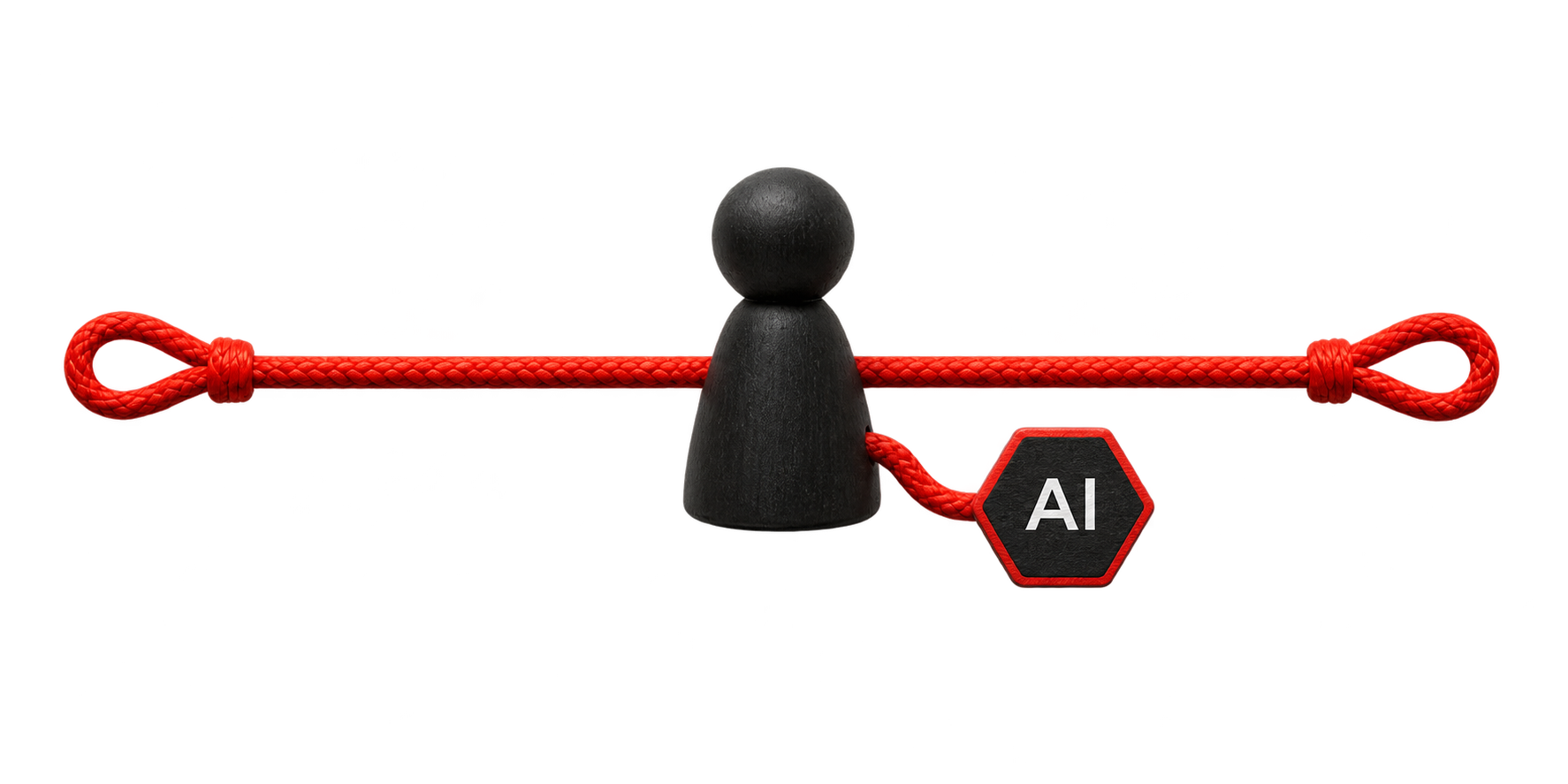
Help one person do their work better.
AI literacy + judgement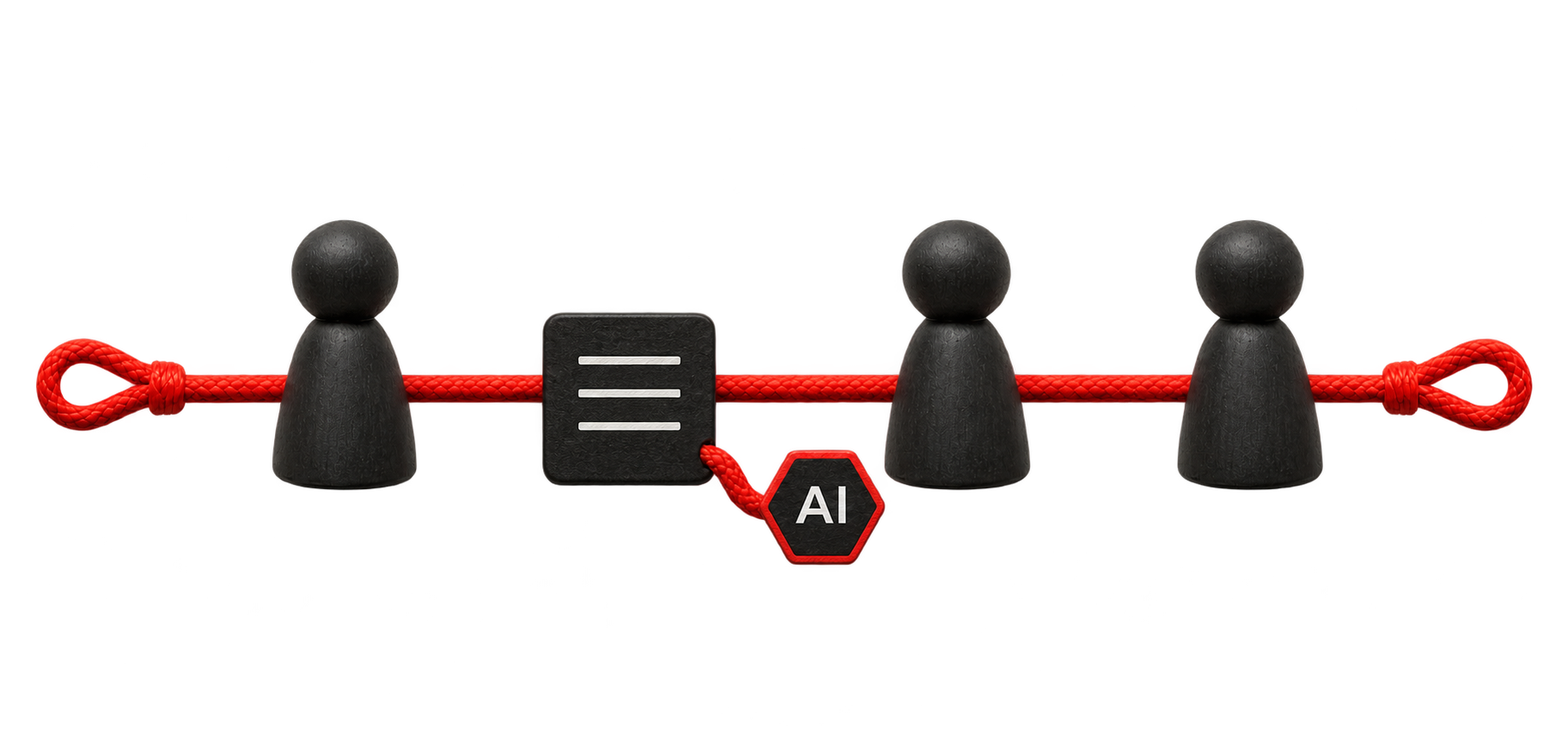
Change how people work together.
Shared context + clear handoffs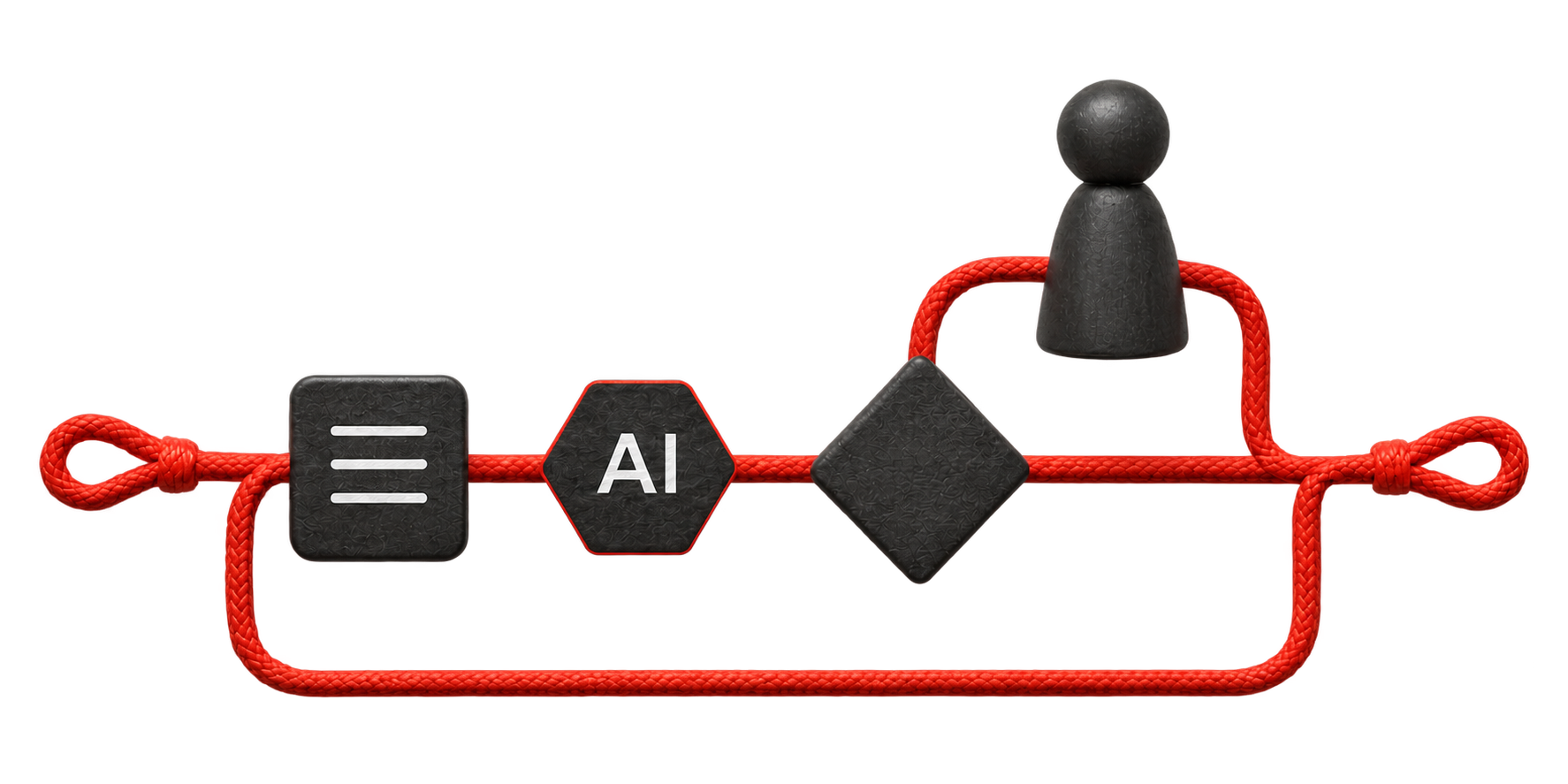
Rethink how a business area operates.
Bounded autonomy + feedbackProgress follows the workflow. A level may take a few weeks or several months. Some workflows stay at level one or two because that is where the useful improvement is.
Use the framework with ChatGPT / Codex, Claude, Copilot, or the tools that fit your company. The starting point is the work, the people and the outcome you need.
SEE THE CHANGE
“40 seats. Start Monday. Can you give us 15% off?”
For this example, the standard discount limit is 10%. The request needs a commercial decision.
Sales uses AI to structure the 40-seat request and draft the proposal, then checks the output.
AI uses the same source information and open questions that sales, operations and finance can see.
AI checks approved data, prepares routine work and flags the 15% discount above the limit.
Finance owns the discount decision at every level. Monday is promised only after availability is confirmed. What changes is the preparation, the handoffs and the route through the work.
FOLLOW THE WHOLE WORKFLOW
The salesperson works better. The handoffs stay the same.
Change: one person's tasks
A salesperson gathers the email, notes and customer history.
Responsibility: Sales
AI helps structure the request and draft a proposal. The salesperson checks it.
Responsibility: Sales + AI support
Operations checks delivery. Finance checks pricing. Answers return through separate messages.
Responsibility: Operations + finance
The salesperson brings the answers together and sends the agreed proposal.
Responsibility: Sales
Which preparation tasks benefit from AI, what information is missing, and where time is lost waiting for other people.
Preparation time and factual accuracy, including the time spent checking and correcting AI output.
People work from the same record. The next step is clear.
Change: the shared workflow
Sales records the request, source information and missing details in one agreed place.
Responsibility: Sales → shared record
AI drafts from the shared brief. Open questions go to the person who can answer them.
Responsibility: Sales + AI support
Operations and finance review named sections. Their decisions stay attached to the proposal.
Responsibility: Named reviewers
The accountable owner approves the final proposal. Everyone can see its status and next step.
Responsibility: Proposal owner
One shared record: source information, open questions, review decisions and status.
Whether the handoffs work in practice, which decisions still cause waiting, and where people need better information.
Time from enquiry to approved proposal, repeated questions, corrections and the effort required from each team.
The operation is designed around decisions, exceptions and outcomes.
Change: the enquiry-to-proposal operation
The workflow checks the required information and routes standard and unusual requests differently.
Responsibility: Operation owner defines intake rules
Routine preparation runs using approved data and offer rules. Missing or conflicting inputs are flagged.
Responsibility: Operation owner sets the boundaries for AI
People handle exceptions and commercial decisions. Approval requirements are explicit.
Responsibility: Accountable decision owner
The approved proposal goes out. Quality, exceptions, cost and outcomes feed the next improvement.
Responsibility: Operation owner
Review exceptions, quality and cost. Improve the next run.
Which steps can be removed, where autonomy is justified, and how the operating rules need to change.
End-to-end turnaround, proposal quality, exception rates and total cost per proposal, alongside business outcomes.
FOR SME OWNERS & LEADERSHIP TEAMS
Help people use AI well. Improve the work they share. Then rethink how a part of your company operates.
Where does the information come from? What changes along the way? Who gets involved? What does the next person need?
INSIDE THE FRAMEWORK
Each level builds on what you learn by doing the work. Choose the scope that fits the workflow and expand when there is a clear reason.
Understand your work. Use AI with judgement.
Who decidesThe person doing the work checks the output and owns the result.
We start with people's actual tasks. They learn to use AI, check its output, and recognise where it helps. The existing process stays largely intact, with useful improvements along the way.
As they work, we trace the information: where it comes from, what gets cleaned, transformed or enriched, where it goes next, and who relies on it.
Practical AI habits, a map of the current workflow, and specific opportunities to improve it.
People can explain the workflow and judge the result, and the next improvement needs someone else's involvement.
Redesign the handoffs. Make the work flow.
Who decidesNamed reviewers and the workflow owner check, approve and handle exceptions.
We bring together the people who create, review and receive the work. We agree where it lives, how information moves, who acts next, and where a human checks or decides.
Parts of the old process remain. Others are rebuilt. Then we run it with real work, find the waiting, ambiguity and rework, and improve it together.
A working process people share: clear inputs, agreed handoffs, named owners, review points and a way to handle exceptions.
The workflow works across people, its results are measurable, and wider changes to roles or decisions have a clear case.
Rethink how the operation works.
Who decidesDecision rights define where AI can act, where approval is required and who owns the operation.
We take a defined area of the business and work back from the outcome it needs to deliver. That can change the steps, the roles, the decisions, and the way information enters the operation.
We define what can run autonomously, what needs approval, how quality is evaluated, and who responds when something goes wrong. We review the cost and value as the operation runs.
A redesigned operation for a defined area, with decision rights, quality checks, cost visibility and an accountable owner.
Quality holds in real use, the value justifies the full running cost, and the team can operate and improve it.
AT EVERY LEVEL
People own the result. We name who checks, who decides and who handles the exceptions.
Quality gets tested on real work. We compare outputs with agreed examples and criteria, including difficult cases.
Information has a source and a destination. We establish what data can be used, who can access it and where it belongs.
The full cost counts. We include setup, tools, checking, rework and ongoing support. Time released and cash saved are tracked separately.
HOW WE WORK TOGETHER
Choose work that matters, happens often enough to learn from, and has someone willing to own the improvement.
We follow a recent example with the people doing and receiving it. We map the information, decisions and delays, and establish today's baseline.
We choose the right level, agree one useful outcome, and put a first version into practice. Real use shows us what needs to change.
We review quality, time, cost and adoption. Then we keep it, improve it, expand it or stop. The decision comes with evidence.
A map of the current workflow, an agreed baseline, one change tested in practice, and evidence for what to do next.
I bring facilitation, practical AI guidance, process design and support through implementation.
You bring a sponsor, a workflow owner, the people involved and access to the relevant work.
LET'S FIND YOUR STARTING POINT
A report that takes too long. A handoff that loses context. A decision that keeps waiting for the same person.
Tell me how it works today, who is involved, and what you would like to improve. That's enough to start a conversation.
Tell me about your workflow
Luka Leskovšek Luka@leskovsek.si
THE PERSON BEHIND WORKING ORDER
AI adoption advisor
I work with founders and leadership teams on AI transformation.
I also lead engineering at Zebra BI.
What I care about is giving people the tools and knowledge to change how they work in ways that used to be out of reach. For many companies, changes like these were too expensive to attempt and too prone to failure.
AI is opening up possibilities we haven't had before. I want people to understand what's possible, build the confidence to try it, and make changes they can own and keep improving.
Get in touch